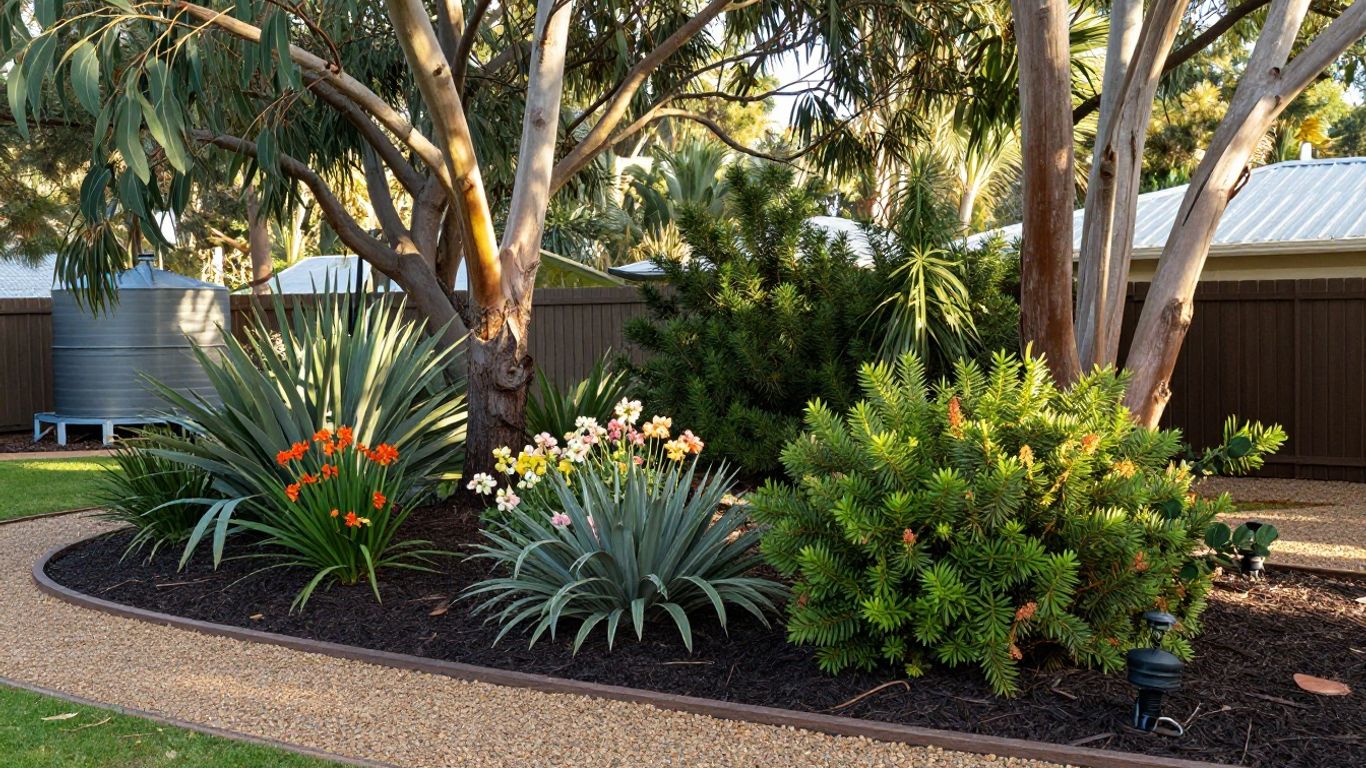
Understand how a greywater garden system works
A greywater garden system redirects lightly used household water to suitable garden areas instead of sending every litre down the drain. The approach can suit low-water Australian yards, but it works best when the landscape, household products, and distribution method are planned together. The aim is controlled reuse, not simply releasing wastewater onto the ground.
What greywater is and where it comes from
Greywater is water from showers, baths, bathroom basins, and washing machines that has not contacted toilet waste. Kitchen sink water is often treated more cautiously because it can contain grease, food scraps, and heavier organic material. Water from toilets, nappies, and other sources contaminated with faecal matter is blackwater and should not enter a garden greywater system.
The water may contain hair, lint, soil, soap residue, and cleaning ingredients. That is why the garden should be designed to receive it below the surface or within covered mulch rather than through open sprays.
How greywater moves from your home to the garden
A typical system separates suitable household outlets from the sewer or septic line and carries water outdoors through pipes. Gravity can move the flow where the house and garden have enough fall; otherwise, a pump and appropriate controls may be needed. Distribution points then spread the water through mulch basins, branched drains, or another approved arrangement.
Flow should be directed to several receiving areas rather than one low spot. This reduces pooling and gives soil time to absorb water between household uses.
Benefits for water conservation and plant health
Reusing greywater can reduce demand on drinking-quality water for ornamental planting and help keep some household water in the local garden cycle. It also delivers small amounts of dissolved nutrients, although those nutrients do not replace careful soil management. Good distribution matters most because too much water in one place can damage roots and create unpleasant odours.
A well-planned system usually works as supplemental irrigation. During wet weather, the garden may need little or no greywater, while hot, dry periods may require extra watering from another source if local rules allow it.
How greywater differs from rainwater harvesting
Rainwater harvesting collects precipitation from roofs and stores it in tanks or other containers. Greywater is generated indoors throughout the day and is generally used soon after it leaves the home rather than stored for long periods. The two sources also differ in quality: rainwater may contain roof debris, while greywater carries household residues.
A low-water yard can use both approaches, but each needs its own plumbing, storage decisions, maintenance routine, and safety checks.
Check safety, regulations, and site conditions
Safety starts before any pipe is installed. Australian requirements vary between states, territories, councils, and site conditions, so the household should check current local guidance and use licensed help where required. A greywater garden system also needs a site that can absorb the flow without affecting buildings, neighbours, waterways, or groundwater.
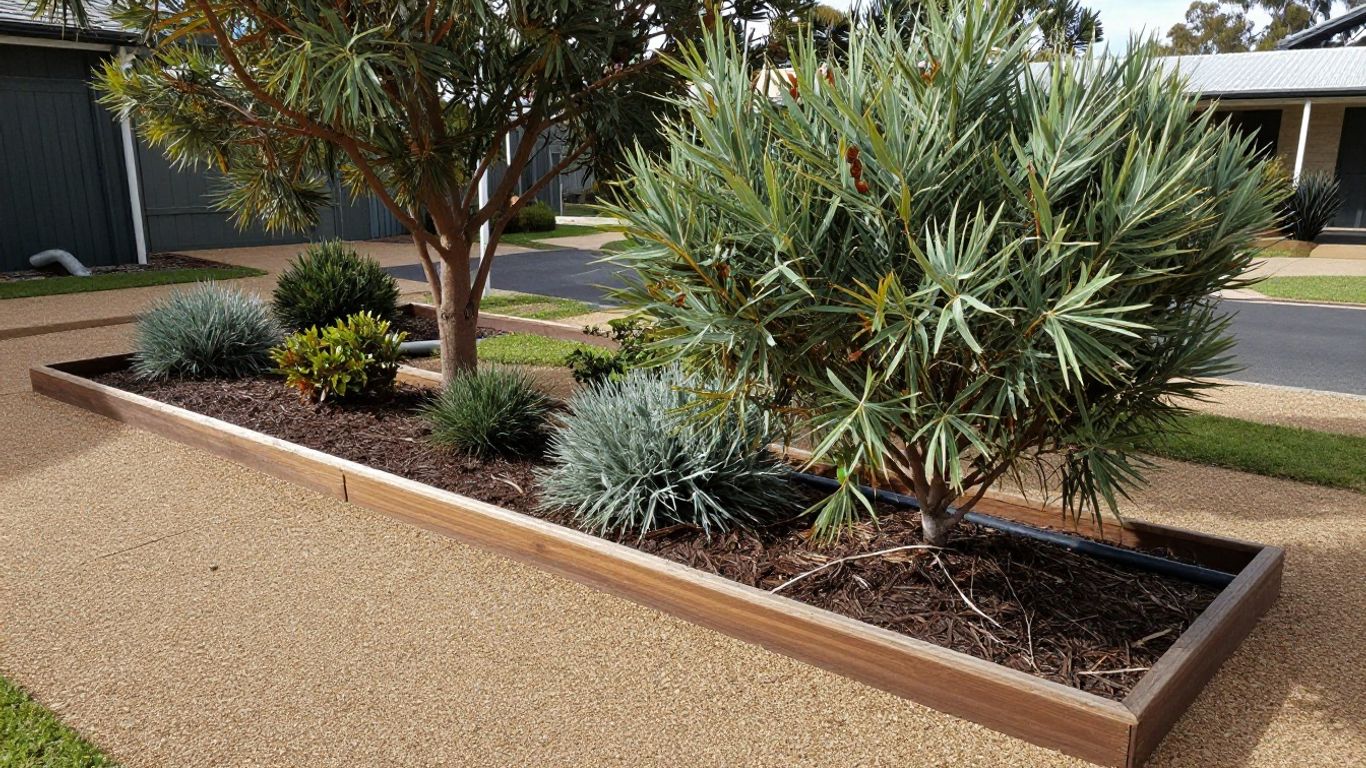
Local rules and permit requirements
The relevant council, water authority, or health authority can explain whether a permit, notification, approved component, or licensed installer is required. Rules may differ for diversion systems, treatment systems, indoor plumbing changes, and irrigation near boundaries or sensitive areas. The household should confirm the requirements before purchasing equipment.
Plans should also account for future owners and maintenance access. Keeping basic drawings, valve locations, and approval records makes the system easier to inspect and explain.
Soaps, cleaners, and products to avoid
Greywater quality depends on what enters the household drain. Products with high salt content, boron, harsh bleach, or strong disinfectants can build up in soil or stress plants, particularly where the same basin receives water repeatedly. Choosing simpler, garden-friendlier products can reduce that load, but no label should be treated as permission to discharge every product outdoors.
A practical household routine includes keeping paint, solvents, medicines, oils, and concentrated chemicals out of greywater lines. Cleaning washing-machine lint filters also helps limit solids reaching the garden.
Soil type, slope, drainage, and groundwater concerns
Clay soil may absorb water slowly, while sandy soil can drain quickly and may need carefully sized receiving areas. Slopes can carry water downhill, so outlets should not be placed where flow could reach foundations, retaining walls, bores, waterways, or a neighbour’s property. The site also needs enough separation from high groundwater and areas that remain naturally wet.
A simple percolation observation after rain can reveal where water lingers, but it does not replace local assessment where the ground is difficult or the site is constrained. The distribution area should be sized for the soil’s actual ability to absorb water.
Keeping greywater away from edible plant parts
Untreated greywater should not be sprayed onto foliage, fruit, herbs, or vegetables that will be eaten. If edible plants are included, water should be directed below the soil surface and away from the parts people harvest, subject to local requirements. Many households keep greywater for ornamental trees and shrubs to make this separation straightforward.
Even when plants are technically separated from the water, produce should be washed appropriately before eating. A clear boundary between edible and greywater-irrigated areas makes everyday decisions easier.
Choose the right greywater garden design
The best design is usually the simplest one that matches the home’s flow, garden layout, and soil. A small system serving a few trees may need only carefully placed basins, while a larger home may need multiple branches and balancing points. The receiving landscape should be designed around the water available rather than forced to accept more than it can use.
Branched-drain systems for low-maintenance irrigation
A branched-drain arrangement divides water through progressively smaller branches so several garden areas receive a share of the flow. It can work well with gravity where there is suitable fall and enough space for accessible, covered outlets. The branches need thoughtful sizing and protection from root intrusion and sediment.
Once balanced, this type of system can be relatively low maintenance. It still needs inspection, because a blocked branch can send excess water to another outlet.
Mulch basins for individual trees and shrubs
A mulch basin is a shallow receiving area filled with coarse organic material that spreads water and shields it from direct contact. Basins are useful around established trees and shrubs when their size matches the expected household flow and the soil’s drainage rate. They should be kept away from trunks and checked for settling or buried outlets.
Mulch is not a substitute for correct siting. A basin that is too small, too deep, or placed on compacted ground may stay saturated and develop odours.
Laundry-to-landscape systems for simple installations
A laundry-to-landscape arrangement diverts suitable washing-machine water outdoors through a dedicated route. It can be simpler than altering several indoor drains, although the machine’s pump, lint, detergents, hose arrangement, and local rules still need attention. The outlets should feed covered mulch basins rather than open channels or spray heads.
Before choosing this option, the household should confirm that the washing machine and garden are compatible. A manual diversion valve can also help send water back to the sewer when products or conditions are unsuitable.
When to consider a filtration or treatment system
Filtration or treatment becomes more relevant when water must be stored, reused in a more controlled way, or distributed through equipment that is vulnerable to fine particles. Such systems add components, energy needs, cleaning tasks, and possible approval requirements. They should be selected for a clearly defined need rather than added automatically.
For a basic ornamental garden, a simple flow path and well-made mulch basins may be easier to operate. If the proposed system is complex, professional design can prevent an expensive mismatch between treatment equipment and garden demand.
Select plants that thrive with greywater
Plant selection should reflect both the water chemistry and the garden’s microclimates. A species that tolerates dry conditions may still struggle if its roots sit in a saturated basin or receive salty water repeatedly. Australian native and Mediterranean-style planting can provide useful starting points, but each plant’s mature size and site preference still matter.
Drought-tolerant trees, shrubs, and perennials
Trees and shrubs with established root systems can make good recipients when basins are positioned beyond the trunk and sized for the expected flow. Hardy perennials and groundcovers may also work around the outer, less saturated edges. Plants should be chosen for the available sun, wind exposure, soil, and frost conditions rather than for drought tolerance alone.
A mixed planting is often more resilient than a single-species bed. It also lets the household observe which plants suit the actual water pattern before expanding the system.
Plants that handle alkaline or salty water
Repeated greywater use can gradually alter soil chemistry, especially where household products add salts or alkalinity. Plants known to tolerate mildly alkaline or coastal conditions may cope better, but tolerance is not unlimited. The household should watch foliage, growth, and soil condition instead of assuming a hardy label solves every water-quality problem.
The following comparison can help organise the planting decision, while local nursery advice can refine the choices for a particular region.
| Planting group | Suitable position | Main consideration |
|---|---|---|
| Hardy trees | Outer mulch basin | Keep water away from the trunk and monitor saturation |
| Tough shrubs | Raised or gently sloping receiving area | Match mature size to the available space |
| Groundcovers | Basin edges | Avoid species that dislike periodic wet feet |
| Edible plants | Separate, carefully controlled area | Keep greywater away from edible plant parts |
The table is a planning aid rather than a fixed plant list. Soil improvement, product choice, and outlet spacing can matter as much as the plant name.
Species to avoid around greywater outlets
Plants that require consistently dry soil, very low salt levels, or exceptionally clean irrigation may perform poorly beside a greywater outlet. Delicate alpine plants and species prone to root rot are risky choices in frequently wet basins. Plants with edible leaves or fruit should also be kept away unless the arrangement meets local guidance and prevents contact.
A plant that declines near one outlet may still succeed elsewhere in the yard. Moving it to a drier position is often better than increasing or reducing the entire system’s flow.
Grouping plants by water and sunlight needs
The garden should be divided into zones based on how much water each group can use. Sun-exposed areas may dry quickly, while shaded corners can remain damp long after a household discharge. Grouping plants by similar needs makes outlet placement and seasonal adjustment more predictable.
A useful arrangement places thirstier, tolerant plants nearer the receiving basin and drier-climate plants farther away. Paths and open soil between groups also make inspections easier.
Install the system step by step
Installation should proceed from the household source to the final receiving areas, with a pause at each stage to check direction, fall, access, and overflow. The system must never create a cross-connection that could contaminate drinking water. Safe construction matters more than making the installation look invisible on the first day.
Planning pipes, valves, and distribution points
First, map the relevant indoor outlets, existing sewer or septic lines, garden boundaries, and the proposed basins. Valves should be reachable so the household can divert water away from the garden during maintenance, heavy rain, or unsuitable product use. Pipes need protection from damage, sun exposure, vehicle traffic, and invasive roots.
Distribution points should be spread across the receiving area. A plan that relies on one outlet is more likely to pool, erode soil, or overload a single plant group.
Creating safe mulch basins and drainage areas
Basins should be shallow enough to remain manageable and deep enough to contain the expected flow without exposing wastewater. Coarse mulch can cover outlets and reduce direct contact, while a clear edge helps reveal overflow. The basin should be positioned so water cannot run towards buildings, paths, or neighbouring land.
After shaping the area, the installer should observe where water settles during a test. Any persistent wet patch is a reason to resize, relocate, or add another receiving area.
Preventing clogs, pooling, and unwanted odors
Clogs often begin with lint, hair, fine mulch, or compacted soil near an outlet. Accessible clean-outs, removable covers, and sensible filters where appropriate make inspection less disruptive. Pooling and odours usually indicate excessive flow, poor drainage, a buried or blocked outlet, or a basin that has lost its absorbent structure.
The household can reduce trouble by keeping unsuitable chemicals out of the line and avoiding very fine mulch. A system that smells should be diverted while the cause is found rather than masked with fragrances.
Testing water flow before planting
Water should be run through the system before plants are installed. This reveals uneven branch flow, leaks, overflowing basins, and areas where soil absorbs water too slowly. Testing also gives the household a chance to label valves and confirm that diversion back to the sewer or septic system works as intended.
Planting can then follow the observed wet and dry zones. This small delay usually produces a more dependable garden than planting first and trying to correct the flow later.
Maintain and improve your greywater garden
A greywater garden system is a living arrangement, not a set-and-forget fixture. Household water use changes, plants grow, mulch settles, and seasons alter how quickly soil absorbs water. A short inspection after installation and regular checks thereafter can catch small issues before they become excavation work.
Inspecting pipes, filters, and outlets
The household should look for leaks, cracked pipes, blocked screens, displaced covers, and roots entering distribution points. Any filters should be cleaned according to their design, with the collected material disposed of appropriately. Outlets need to remain covered and visible enough for routine checking.
Inspection is easiest when valves and clean-outs are labelled. A simple sketch kept with household maintenance notes can save time when the system needs to be diverted.
Refreshing mulch and managing soil buildup
Mulch gradually decomposes, compacts, and collects lint or fine sediment. Refreshing it helps maintain infiltration and keeps outlets covered, but new material should not bury trunks or make basins too deep. If the soil surface becomes crusted or raised, the receiving area may need careful reshaping.
Salt or nutrient buildup can also affect plant health. Declining growth, scorched leaf edges, and poor infiltration deserve attention to product choice, soil condition, and water distribution rather than more frequent watering.
Adjusting irrigation during rainy or dry seasons
During wet weather, the garden may have little capacity for additional household water. Diverting greywater away from saturated areas protects roots and reduces runoff. In dry weather, plants may use more water, but the system should still deliver only what the soil can absorb.
Seasonal adjustment may involve changing a valve, moving a removable outlet, adding mulch, or using another approved irrigation source. The garden’s condition should guide each change.
Troubleshooting common system problems
Most problems can be narrowed down by checking the source, the route, and the receiving area in that order. A practical first check is to confirm whether the household appliance or drain is producing flow, then inspect valves, pipes, branches, and basins.
These checks provide a useful starting sequence:
- Divert the flow and inspect the source for lint, grease, or unsuitable products.
- Check accessible pipes, valves, clean-outs, and filters for blockage or leakage.
- Examine each basin for pooling, erosion, exposed outlets, or compacted mulch.
- Confirm that water is staying within the intended garden area.
After the immediate fault is corrected, the household should run a small test and observe the receiving areas again. Repeated failures may indicate that the system is undersized, poorly graded, or unsuitable for the site and needs qualified review.
Conclusion
A greywater garden can make a low-water Australian yard more efficient when household sources, soil, plants, and drainage are treated as one connected design. Careful product choices, covered distribution, local compliance checks, and regular observation keep the system safer and more useful. The most successful installation is usually the one that remains simple enough for the household to understand and maintain.
Frequently Asked Questions
What water can usually enter a greywater garden system?
Water from showers, baths, bathroom basins, and washing machines is commonly considered greywater. Kitchen water and any water contaminated with toilet waste may be subject to different rules or should be excluded.
Can greywater be stored in a tank?
Untreated greywater is generally used soon after it is produced because storage can lead to odours and water-quality problems. Any storage or treatment arrangement should follow current local requirements.
Is greywater safe for vegetable gardens?
Greywater should not touch edible plant parts. Many households use it for ornamental plants, trees, and shrubs, or use a carefully designed subsurface arrangement that complies with local guidance.
What plants are best for greywater irrigation?
Plants that tolerate occasional moisture, varied soil chemistry, and dry conditions are often more suitable than delicate species. The final choice depends on the region, sunlight, drainage, and household product use.
Why does a greywater basin smell?
Odours can result from pooling, blocked outlets, unsuitable products, compacted mulch, or excessive flow. Diverting the water while checking the source, pipework, and basin can help identify the cause.
Does a greywater system work in clay soil?
It can, but clay absorbs water slowly and may need smaller or more widely distributed receiving areas. Site drainage, slope, overflow protection, and local rules should be assessed before installation.
How often should a greywater garden be inspected?
It should be checked after installation, after major changes to household use, and regularly through the year. More frequent checks are sensible after heavy rain, very dry weather, or any change in plant health.