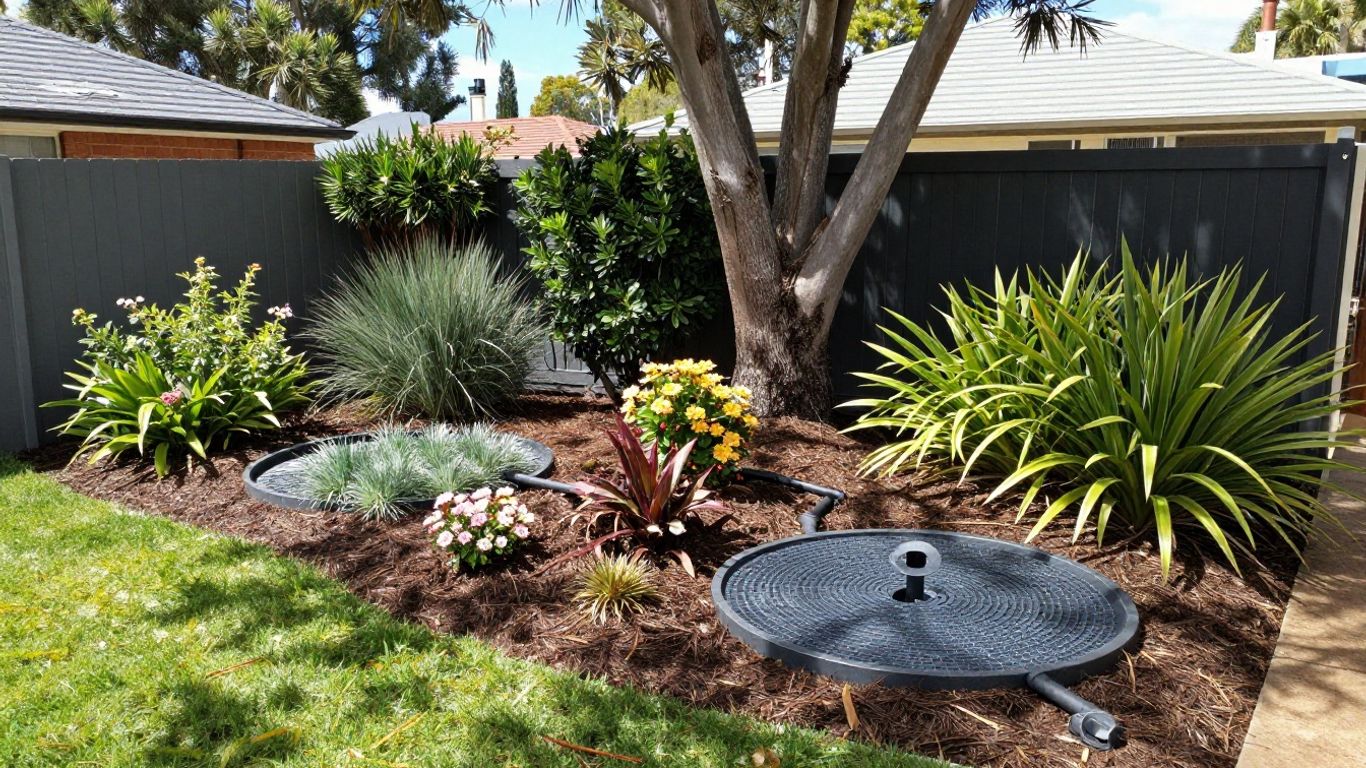
Understand how a greywater garden system works
A greywater garden system redirects lightly used household water towards planted areas instead of sending every drop straight to the sewer or septic system. It can suit a low-water Australian backyard, but it needs thoughtful planning because untreated greywater is best treated as a fresh, short-lived flow rather than something to store indefinitely. The aim is not to flood a garden; it is to spread modest amounts of water through soil and mulch where plants can use it safely.
What greywater is and where it comes from
Greywater is wastewater from household activities that do not involve toilets. Depending on the local rules and the design, it may come from showers, baths, bathroom basins and washing machines. It can contain soap, hair, lint and small amounts of body oils, so it is not clean drinking water, but it is generally less contaminated than toilet wastewater.
A practical system captures water close to where it is produced, then directs it to a suitable planted area. Untreated greywater should usually be used soon after it is generated, rather than held in a tank where it can become unpleasant or unsafe.
How greywater differs from blackwater
Blackwater contains toilet waste and has a much higher pathogen risk. It requires a different level of treatment and should not be casually diverted into a household garden. Keeping blackwater completely separate is one of the basic safety boundaries for any greywater project.
Greywater still needs care. Direct contact, runoff into neighbouring properties and discharge onto hard surfaces can all create problems. The safest designs keep the water below a mulch layer and away from areas where people commonly walk, play or harvest food.
Benefits for water conservation and garden health
Reusing suitable household water can reduce demand on mains water for selected garden areas. It also gives a garden a more reliable source of supplemental moisture during dry periods, although it should not be regarded as a complete replacement for rain or careful irrigation.
The garden benefits most when the flow is spread across well-drained soil and plants suited to changing moisture. Mulch helps slow evaporation and supports soil life, while a properly sized distribution area prevents one corner from receiving too much water. Good placement matters as much as the plumbing itself.
Common system types for home landscapes
A simple gravity-fed arrangement can lead water from a laundry or bathroom outlet to shallow mulch basins. This approach is often easier to observe and maintain, provided the garden has enough slope for the water to move without pooling.
Other systems use branched pipes, diversion valves or a pump where gravity is not practical. Each arrangement needs a bypass back to the sewer or septic system, because wet weather, maintenance and household cleaning products may make diversion unsuitable at times. The right system is the one that matches the home, the soil and the amount of water produced.
Plan your greywater garden
Planning should come before trenching. A household needs to understand how much water is produced, where existing pipes run and how the garden behaves after rain. The best location is usually a planted area that can accept regular, moderate inflow without creating a nuisance for neighbours or household members.
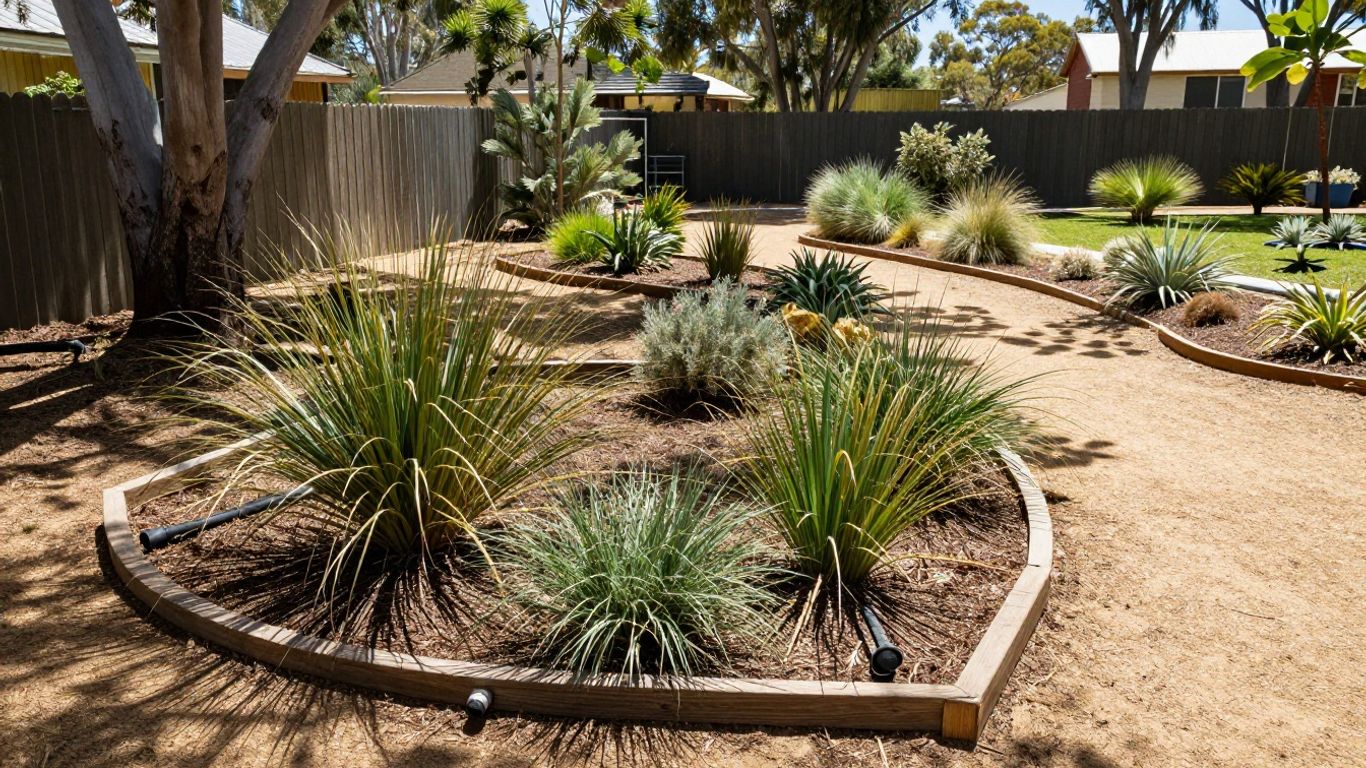
Assess household water use
A greywater garden works with the household’s existing habits, so the first step is to observe when laundry, showers and bathroom use generate water. The flow will vary from day to day, and a system designed around an occasional peak may remain too wet during quieter periods.
A simple household record can help reveal useful patterns. The following questions are more helpful than a rough guess made from one busy day:
- Which fixtures produce greywater, and where are their pipes located?
- Does water arrive in short surges or at fairly regular intervals?
- Are there seasons when outdoor demand or household use changes noticeably?
- Which garden areas already receive rain, runoff or other irrigation?
After a week or two of observation, the household can choose a distribution area that has enough capacity without needing excessive storage. In many small systems, using water as it is produced is simpler than trying to hold it.
Choose a suitable garden location
A suitable location is planted, accessible for inspection and separated from buildings, paths and areas where children or pets regularly play. It should not direct water towards foundations, retaining walls or neighbouring land. Trees and established shrubs can often make good recipients, but their roots and existing services need to be considered before digging.
Sunlight also affects how quickly soil dries. A sunny area may accept more frequent flow than a shaded hollow, while a low point can stay wet long after the rest of the garden has dried. The location should therefore be chosen for its drainage and planting conditions, not simply because it is closest to the bathroom.
Check soil drainage and slope
Soil should accept water without remaining saturated. A simple infiltration check can reveal whether the proposed area drains slowly, although local soil conditions may still vary across a single yard. Heavy clay may need broad, shallow distribution and careful observation; sandy soil may require more spread so water does not run straight through one narrow channel.
A gentle slope can help gravity-fed systems, but steep ground may move water too quickly and cause erosion. Terraced mulch basins or several smaller receiving areas can slow the flow. If water appears at the surface, the system needs less inflow, more distribution area or a different location.
Estimate storage and distribution needs
Untreated greywater should not normally be stored for long periods. Instead, the design should provide enough receiving area to accept the household’s typical flow while allowing a simple diversion back to the sewer or septic system when the garden is wet.
The following broad planning comparison helps match the source to the garden:
| Greywater source | Typical flow pattern | Main planning concern | Suitable receiving approach |
|---|---|---|---|
| Shower or bath | Short, irregular surges | Sudden volume and warm water | Broad mulch basin or several basins |
| Bathroom basin | Small, frequent amounts | Soap and toothpaste residues | Close planting with good drainage |
| Washing machine | Larger intermittent discharge | Lint, detergent and changing loads | Divided basins with easy inspection |
| Combined sources | Variable and sometimes high | Overloading one garden area | Multiple zones with a bypass |
The table is a planning aid rather than a measurement guide. A household should check the actual flow and watch the receiving soil during use. If one zone stays wet, the answer is usually to spread the water more widely or divert some flows, not to bury the outlet deeper.
Choose safe greywater sources
Not all household wastewater belongs in a garden. Source selection affects odour, soil condition, plant health and the level of human contact. A cautious design begins with the cleanest suitable sources and keeps questionable flows on the normal sewer or septic route.
Laundry, bathroom, and shower water
Shower and bath water are common starting points because they contain no toilet waste, although they still carry soaps, skin oils and hair. Bathroom basin water can also be useful, provided the household avoids putting harsh chemicals down the drain.
Laundry water requires closer attention. Detergent type, load size and washing habits can change its chemistry from one cycle to the next. Lint filters and an accessible diversion route make it easier to inspect the flow and respond if the soil or plants begin to show stress.
Why kitchen and toilet wastewater need special handling
Toilet wastewater is blackwater and should remain in the approved sewer or septic system. Kitchen wastewater can contain grease, fats, food scraps and a heavier organic load, which may attract pests, clog pipes and create odours. It is therefore unsuitable for a simple household greywater arrangement unless a properly designed and approved treatment system is being used.
Even a bathroom source can become unsuitable if cleaning products, disinfectants or other harsh substances are regularly poured into it. The safest approach is to keep the system narrow, predictable and easy to bypass.
Selecting plant-friendly soaps and detergents
Products that are low in salt and less harsh on soil are generally a better match for greywater reuse, but labels and local guidance should still be checked. The household should avoid assuming that a product is garden-safe simply because it is marketed as natural.
Small changes can reduce the load entering the garden. For example, residents can use the minimum effective amount of detergent, keep unnecessary disinfectants out of diverted drains and choose cleaning products with ingredients suited to the planned system. The impact is cumulative, especially where the same soil receives water every week.
Keeping harmful chemicals out of the system
Paint residue, solvents, strong disinfectants, concentrated cleaners and products containing high levels of salt should be kept out of diverted water. Pool chemicals and garden chemicals also belong in their intended disposal or drainage pathway, not in a greywater line.
A household notice near the laundry or bathroom can help everyone remember which drains are connected. If an unsuitable product is used accidentally, the bypass should be opened and the next flow sent away from the garden. Observing leaf damage, crusty soil or unusual smells early gives the household a chance to correct the source before the problem spreads.
Design the system components
A sound design manages water from the fixture to the soil in a predictable sequence. It needs a way to divert flow, handle sudden surges, distribute water across more than one point and return to the ordinary wastewater route. Simple components are often easier to inspect than a complicated network hidden underground.
Diversion plumbing and surge capacity
Diversion plumbing branches from an existing wastewater line and sends selected flow towards the garden. The branch should have the correct fall, secure joins and enough capacity for the largest expected discharge. Where gravity cannot provide reliable movement, a pump may be considered by a qualified installer.
Surges from a bath or washing machine can overwhelm a narrow pipe or small basin. Several receiving points, a wider distribution area or a temporary diversion can reduce that risk. The system should never depend on a blocked or overflowing fixture as a form of storage.
Filters, valves, and mulch basins
A filter can catch lint and larger particles before they reach distribution pipes, but it does not make greywater safe to drink or remove every dissolved substance. Filters need to be accessible, and valves should be labelled clearly enough that a household member can operate them during wet weather or maintenance.
Mulch basins are shallow receiving areas filled with coarse organic material. They spread water near the root zone, reduce direct contact and help prevent surface runoff. Basins should be sized to the flow and soil, then topped up as the mulch breaks down.
Pipes, outlets, and distribution methods
Buried pipes can carry water to several basins or planted zones, while exposed sections may make early testing easier. Outlets should be protected from roots, sediment and accidental contact. Distribution should favour several modest outlets over one powerful discharge that erodes soil.
The layout also needs room for future inspection. A garden that hides every valve beneath dense planting may look tidy at first but become frustrating to maintain. Access covers, visible markers and simple pipe runs are practical design choices rather than visual compromises.
Building in an easy bypass to the sewer or septic system
A bypass is essential for rainy periods, repairs, illness in the household or any time the garden should not receive more water. It should be possible to operate the bypass without dismantling pipework or digging up the garden.
The bypass also protects the system when a household uses a strong cleaning product. A clear valve arrangement lets residents send the affected flow through the ordinary wastewater route and resume diversion once the risk has passed. Local plumbing requirements may dictate the exact arrangement, so qualified advice is sensible before connection.
Select plants and prepare the soil
Plants should be chosen for the actual conditions created by the system, not simply for their reputation as drought-tolerant species. A greywater receiving area may be periodically moist, shaded by buildings or exposed to detergent residues. Australian natives that handle local climate conditions can work well, but every plant still needs a suitable position and healthy soil.
Plants that tolerate greywater conditions
Trees, shrubs and hardy groundcovers are often more suitable than delicate annuals because their roots can occupy a broader receiving area. Species that tolerate occasional moisture and ordinary garden mulch are useful candidates, provided they are not planted where their roots may damage pipes or foundations.
Plants that are highly sensitive to salt or repeated wetting may decline even when the system appears to be flowing correctly. A mixed planting palette gives the household a chance to observe what thrives before expanding the system. Local nurseries and native plant groups can help identify species suited to the region.
Matching plant choices to sunlight and moisture
The same greywater flow can behave differently in full sun, dappled shade and a low-lying corner. Moisture-loving plants belong nearer the receiving area, while plants that prefer dry soil should sit farther away or on a slightly raised edge. This creates a gradual moisture pattern instead of forcing every plant to tolerate identical conditions.
Plant spacing matters as well. Crowded roots can slow infiltration, and dense foliage can hide pooling or unpleasant smells. Leaving inspection paths between zones makes it easier to adjust outlets as the garden matures.
Improving drainage and soil structure
Healthy soil should contain enough organic matter to support plant roots while remaining open enough for water to move through. Compost, aged mulch and careful cultivation may improve structure, but amendments should be chosen with the existing soil and the greywater source in mind. Excessive fine material can make clay soil tighter rather than more workable.
Mulch should be kept deep enough to cover outlets and reduce evaporation, then replenished as it decomposes. Soil should not be compacted by repeated foot traffic around the receiving area. If drainage remains poor, changing the distribution design is safer than continually adding water-absorbing products.
Protecting edible crops from contamination
Edible plants require extra caution because greywater may contain microorganisms and household residues. A conservative design keeps untreated greywater away from leaves, fruit and parts of vegetables that are eaten raw. It also avoids using greywater on root crops that may contact the receiving soil.
Ornamental planting is usually simpler. If a household intends to grow food near a greywater area, it should check current local health and water-reuse guidance and maintain a clear separation between the receiving zone and edible beds.
Install the greywater garden system
Installation should be treated as a plumbing and landscape project, not merely a matter of burying a hose. The work needs accurate levels, secure connections and a clear understanding of where water will go during a heavy discharge. A qualified plumber may be required for changes to household wastewater plumbing.
Preparing the site and digging distribution areas
Mark the pipe route, valves, access points and receiving zones before excavation begins. Check for underground electricity, gas, water and communications services, then keep trenches and basins clear of major roots where possible. Shallow, broad basins are generally easier to inspect than deep pits.
The excavated soil should be kept available for backfilling if it is suitable. Any area that is unstable, waterlogged or close to a building should be reconsidered before the pipe is connected. A little more planning at this stage can prevent difficult repairs later.
Connecting plumbing with proper flow direction
Pipes should fall consistently towards the distribution areas, with joints secured and protected from movement. The system should never allow greywater to back up into a bathroom, laundry or other household fixture. Valves must be installed in positions where they can be reached without entering wet mulch.
Connections to existing wastewater plumbing must follow local requirements. Where the work is regulated, a licensed professional can confirm the correct fittings, air gaps, inspection points and discharge arrangements.
Covering outlets with mulch
Once outlets have been tested, they should be covered with coarse mulch so water enters the receiving zone below the surface. The mulch should not be packed so tightly that it prevents flow or makes inspection impossible. A visible access point or removable cover helps the household find the outlet later.
The receiving surface should be shaped to contain water without creating a bowl that stays saturated. Several covered outlets spread through the basin are usually easier on soil than one concentrated stream.
Testing the system before regular use
Testing should begin with clean water or a carefully chosen ordinary flow, while a second person watches the basins and pipe route. The household should check for leaks, unexpected pooling, backflow, rapid erosion and water escaping towards paths or buildings.
After the first test, the system should be observed over several use cycles rather than declared successful immediately. Small adjustments to valves, mulch depth or outlet position can make a large difference. The bypass should also be operated once so everyone knows how it works before an urgent situation arises.
Maintain and troubleshoot the system
A greywater garden remains healthy through regular observation. Plants, mulch and pipes change over time, and a layout that worked in a dry month may behave differently after heavy rain. Maintenance is mostly practical: inspect the flow, keep outlets open, respond to odours quickly and use the bypass whenever conditions are unsuitable.
Inspecting pipes, filters, and mulch basins
Filters should be checked at an interval that suits the amount of lint and debris they collect. Pipes and outlets should be inspected for roots, sediment and damage, while mulch basins should be checked for compacted material or signs that water is escaping at the surface.
The garden itself provides useful clues. Wilting may indicate poor distribution rather than too little household water, while yellowing or salt-like crusts can signal an unsuitable source or excessive concentration. Keeping a brief maintenance record helps connect changes in the plants with changes in household products or rainfall.
Preventing odors, pooling, and clogged outlets
Odours usually mean water is remaining stagnant, organic material is accumulating or a source has introduced too much waste. Pooling can result from compacted soil, a blocked outlet, an undersized basin or more flow than the area can accept. These issues should be addressed promptly rather than covered with extra mulch.
A sensible response is to stop diversion, inspect the filter and outlet, and check whether the soil is saturated. Once the cause is corrected, water can be reintroduced gradually. If the smell returns, the source and distribution design both need another review.
Adjusting flow during wet and dry seasons
During wet weather, the garden may need little or no additional water. The bypass should then send greywater to the sewer or septic system, especially when soil cannot absorb another discharge. In dry weather, several receiving zones can help spread household flow, but increased diversion should not be used to force plants into constantly wet conditions.
Seasonal adjustments may include changing valve positions, moving temporary mulch or pausing a particular source. The garden should be allowed to dry to its normal level between flows rather than managed according to a fixed calendar.
Knowing when to clean, repair, or bypass the system
Cleaning is appropriate when filters or outlets are visibly obstructed, while repairs are needed for cracked pipes, leaking joints or damaged valves. Bypass the system when the soil is saturated, an unsuitable chemical has entered the line, a component has failed or local conditions make diversion inappropriate.
A household should not keep using a system simply because the water still appears to move. Repeated pooling, strong odours, plant decline or contaminated runoff are signs to stop and reassess. A professional can help when the fault involves household wastewater plumbing or a buried line that cannot be safely located.
Checking local regulations and permit requirements
Rules for greywater vary between Australian states, territories and councils. Requirements may cover approved sources, plumbing work, setbacks, treatment, discharge locations and whether a permit or inspection is needed. The household should check the current guidance for its address before buying equipment or changing drainage connections.
Local requirements are part of good design, not an administrative afterthought. They protect household members, neighbours and the wider environment, and they may identify technical details that are easy to miss in a do-it-yourself plan.
Conclusion
A well-planned greywater garden system can make better use of suitable household water while supporting a resilient, low-water yard. The strongest designs keep sources separate, spread flow through mulch and healthy soil, choose plants for the actual conditions and include an easy bypass. Careful observation and local guidance matter more than complexity: a simple system that is accessible, adjustable and well maintained is usually the most useful one.
Frequently Asked Questions
What is a greywater garden system?
It is an arrangement that directs selected wastewater from sources such as showers, bathroom basins or washing machines to planted areas. It does not include toilet wastewater and should be designed so water is distributed safely through suitable soil and mulch.
Can greywater be stored in a tank?
Untreated greywater is generally best used soon after it is produced rather than stored for long periods. Storage can increase odours and hygiene concerns, so any tank-based approach needs appropriate treatment, design and local approval.
Is kitchen sink water suitable for a garden?
Kitchen water often contains grease, fats, food scraps and a heavier organic load than bathroom or laundry water. It should not be added to a simple system unless a properly designed treatment arrangement and local requirements specifically allow it.
Can greywater be used on vegetables?
Untreated greywater should be kept away from edible parts of plants, particularly produce eaten raw and crops that contact the soil. Ornamental planting is usually a simpler and lower-risk choice, but local guidance should be followed.
What plants work well with greywater?
Plants should tolerate the site’s sunlight, soil drainage and occasional moisture, as well as the characteristics of the chosen household water. Hardy shrubs, trees and groundcovers are often easier to manage than delicate plants, but local conditions determine the best choices.
How can a household prevent greywater odours?
Use suitable sources, avoid long storage, keep filters and outlets clear, and spread flow across a receiving area that drains properly. If an odour develops, pause diversion and inspect the source, pipework, mulch and soil for stagnant water or blockages.
Does a greywater system need council approval?
Requirements differ by location and by the type of system being installed. The household should check with its council, water authority or a licensed plumbing professional before altering wastewater plumbing or installing a permanent diversion arrangement.