Understand how a greywater garden system works
A greywater garden system redirects selected household wastewater to planted areas instead of sending every drop straight to the sewer or septic system. It can reduce demand on mains water, but it needs thoughtful design because greywater is still used water, not drinking water. In a low-water Australian backyard, the aim is steady, contained irrigation rather than a constantly wet garden.
What greywater is and where it comes from
Greywater generally comes from showers, baths, bathroom basins and laundry, provided it has not been mixed with toilet waste. Some homes divert this water outdoors through simple gravity-fed plumbing, while others use pumps or a professionally designed distribution system. The volume and quality will change with household routines, cleaning products and the number of people using the home.
How greywater differs from blackwater
Blackwater includes toilet waste and other wastewater with a higher risk of disease-causing organisms. It requires a different level of treatment and is usually subject to stricter controls. Greywater still needs careful handling: it should not be stored for long periods, allowed to pool, or applied where people could easily contact it.
How plants, soil, and mulch filter reused water
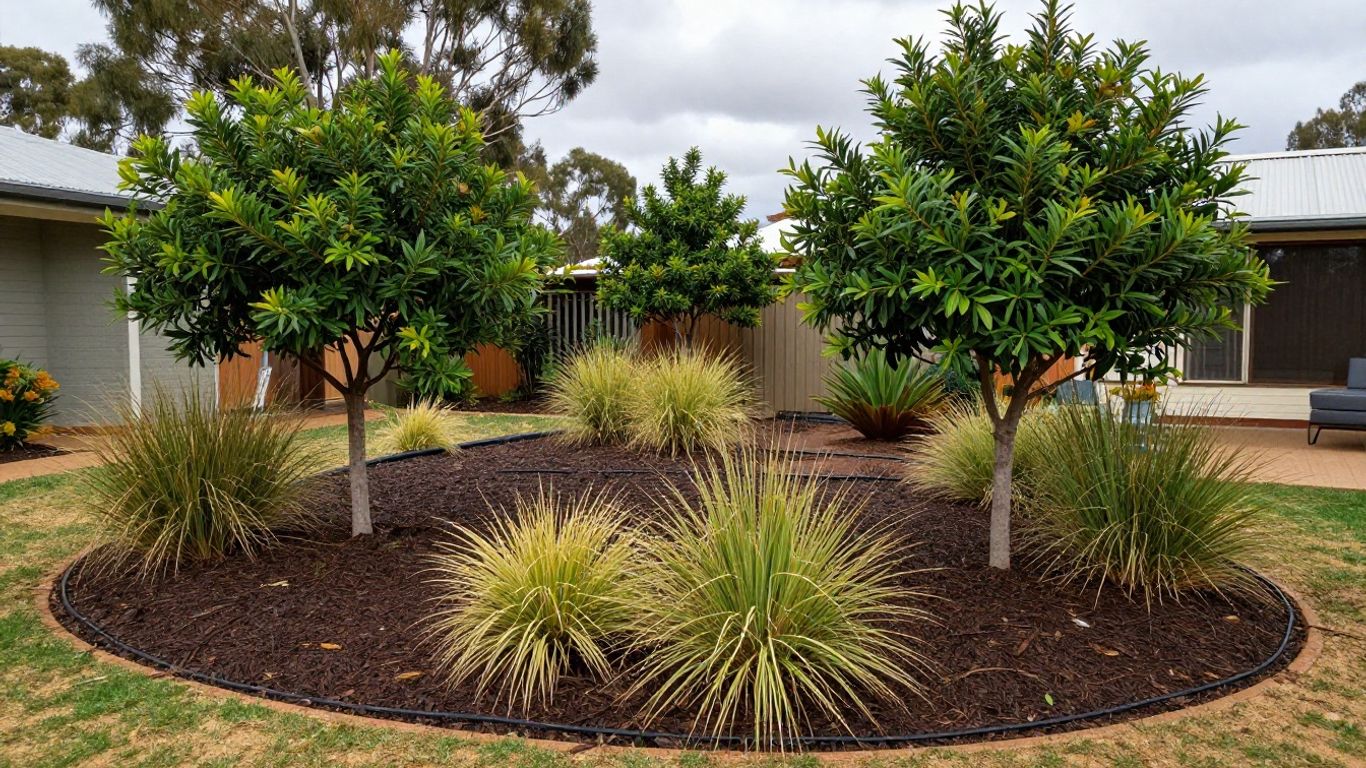
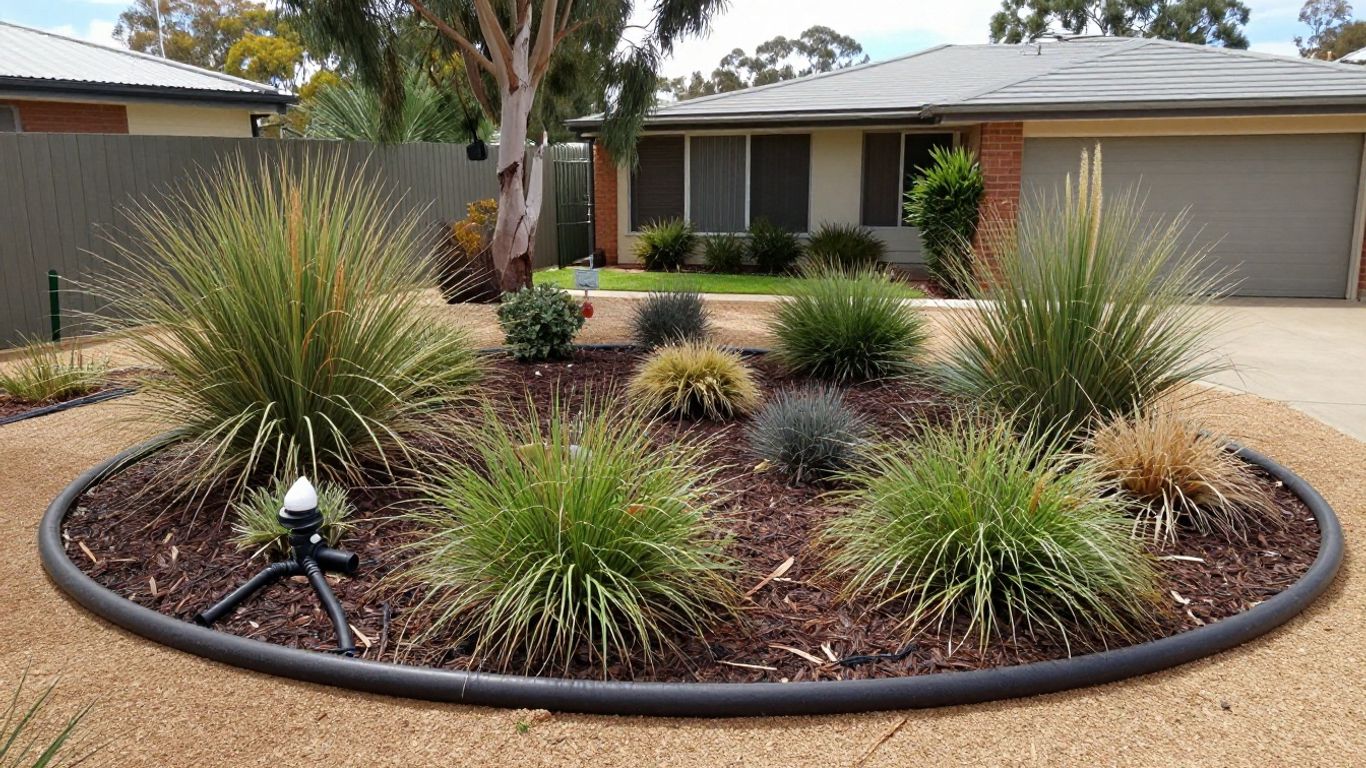
Plants take up some water, while soil organisms and the soil itself help retain and break down a portion of the organic material. A thick layer of coarse mulch spreads the flow and keeps outlets covered, reducing contact with people and pets. This is a natural treatment step, not a guarantee that every contaminant has been removed, so the system should be sized for the site rather than pushed beyond its drainage capacity.
Benefits and limitations for home gardens
Reused water can support trees, shrubs and ornamental planting through dry periods, particularly when it is directed to the root zone. It may also reduce the amount of potable water used outdoors. The limitations are just as practical: salts can build up, some products can harm soil life, and a poorly drained basin can smell or become a nuisance. Good design matters more than complexity when the system is kept simple and regularly observed.
Check local rules and choose a safe site
Rules for greywater vary between Australian states, territories, councils and property types. Before any pipe is altered, the household should check the current requirements with the relevant local authority and confirm whether a licensed plumber or approval is required. A safe site also protects neighbours, groundwater and the garden itself.
Reviewing state and local greywater regulations
The household should look for current guidance covering permitted water sources, diversion equipment, setbacks, drainage and maintenance. Requirements may differ for diversion devices, treatment systems and new building work. Written guidance is useful, but a licensed local professional can clarify how the rules apply to a particular property.
Keeping greywater away from wells, waterways, and property lines
Irrigation zones should be positioned away from private wells, creeks, stormwater drains and neighbouring boundaries, with enough separation for the site and local rules. Water should remain within the property and should not flow onto paths or adjoining land. Where the property is small or the site is close to sensitive water, sewer or septic disposal may be the safer choice.
Choosing suitable soil, slope, and sunlight conditions
A gently sloping area with free-draining soil is usually easier to manage than a flat, compacted lawn. The garden should receive enough sunlight for its plants while still allowing the soil to dry between flows. A simple test hole filled with water can reveal whether the ground drains steadily or holds water for too long, although it does not replace professional assessment where conditions are uncertain.
Identifying areas that need extra drainage or protection
Clay pockets, retaining walls, heavy foot traffic and low points deserve particular attention. Roots should not be exposed to concentrated flows, and children or pets should not have easy access to open outlets. If rain already causes pooling, the area needs drainage improvements or a different irrigation method before greywater is added.
Select household water sources and suitable plants
The safest design begins by choosing water sources that are relatively predictable and easy to keep separate from toilet waste. Plant selection then follows the water quality, soil and climate rather than the other way around. In Australian gardens, hardy local species often cope better with irregular flows and dry conditions than thirsty lawn or delicate annuals.
Choosing water from showers, bathroom sinks, and laundry
Shower and bath water, bathroom basin water and laundry water are common sources for garden diversion. Laundry water can contain lint, detergent residues and variable amounts of soil, so it may need extra screening and careful product choices. The flow should be used soon after it is produced, with a diversion back to the normal sewer or septic route when the garden cannot accept it.
Avoiding kitchen wastewater and hazardous cleaning products
Kitchen water contains grease, food scraps and a heavier organic load, making it more likely to clog pipes, smell or attract pests. It is generally better kept out of a basic garden diversion system. Bleach, solvents, strong disinfectants, paint residues and other hazardous substances should never be deliberately routed to planting beds.
Selecting salt-tolerant and drought-resistant plants
Plants that tolerate dry conditions and moderate changes in moisture are a sound starting point. Australian natives, established shrubs, small trees and some ornamental grasses may suit the setting, provided their mature size and root behaviour are considered. Salt tolerance matters because repeated detergent use can gradually affect soil structure and plant health.
Understanding which edible crops are appropriate
Edible planting needs extra caution because untreated greywater can carry contaminants and residues. It is generally safer to direct it to ornamental plants, screening shrubs or established trees rather than leafy vegetables and root crops. Any food garden should follow current local health guidance, use potable water where appropriate and keep edible parts away from greywater contact.
Design the plumbing and irrigation layout
A reliable layout matches the expected flow to the soil’s ability to absorb it. The shortest route is not always the best route: access for inspection, a safe fallback to sewer or septic and an overflow path all matter. The design should keep greywater moving rather than storing it in a tank without suitable treatment.
Estimating daily greywater volume
A household can begin with a simple record of how often showers, laundry loads and bathroom use occur, rather than relying on a guessed average. The estimate should account for quieter days, visitors and seasonal changes. Irrigation areas can then be sized conservatively, leaving capacity for rain and allowing the soil to dry between applications.
A rough planning table helps compare sources without pretending that household use is fixed:
| Source | What to observe | Main design concern | Suitable starting approach |
|---|---|---|---|
| Shower or bath | Frequency and duration | Sudden flow peaks | Small mulch basin or distributed outlets |
| Bathroom basin | Intermittent handwashing | Low, irregular volume | Combine with another suitable source |
| Laundry | Load size and detergent | Lint, salts and variable flow | Screened diversion to robust planting |
| Rainy-period overflow | Wet soil and runoff | Reduced absorption | Automatic or manual return to sewer route |
The table is a planning aid, not a promise of performance. After installation, the soil and plants provide the better evidence: if water remains on the surface, the flow or area needs adjusting.
Choosing branched-drain, mulch-basin, or subsurface systems
A branched-drain arrangement can distribute gravity-fed water across several planting zones without a complex pump. Mulch basins are easy to see and maintain, while subsurface delivery can reduce surface contact when it is correctly installed. The best option depends on fall, soil, access, local rules and the household’s willingness to inspect it.
Adding filters, diverter valves, and inspection points
Screening can catch hair, lint and larger solids before they reach the garden, but filters must remain accessible and easy to clean. A diverter valve lets the household send water back to the sewer or septic system during storms, maintenance or unsuitable product use. Inspection points at changes of direction make blockages much less frustrating to find.
Planning overflow routes for rainy periods or system backups
Every basin needs a safe overflow route that does not cross a path, enter a neighbour’s property or discharge into a stormwater drain. The fallback should lead to the approved sewer or septic route where possible. During extended rain, the garden should be allowed to rest rather than being forced to accept water it cannot absorb.
Build the greywater garden system
Construction should be deliberate and reversible where possible. Before digging, the household should locate existing services and mark the route from the source to each planting zone. A small, well-observed installation is usually easier to improve than a large network buried before its behaviour is understood.
Preparing mulch basins and planting zones
Basins should be broad enough to spread the flow and deep enough to hold a generous layer of coarse wood mulch. They should not be sealed ponds. Planting should sit around the distribution area, with species grouped according to their moisture tolerance and enough space for mature roots and branches.
Installing pipes with the correct slope
Gravity-fed pipes need a steady fall without dips that trap water or sharp rises that interrupt flow. Joints should be secure, and the route should remain accessible during early testing. Where a pump is needed, the equipment should be selected and installed according to the applicable requirements rather than improvised from garden-hose fittings.
Keeping outlets below the soil or mulch surface
Outlets should discharge beneath the mulch surface so water is less exposed and does not form a visible stream. The opening must remain clear enough to flow, while the surrounding mulch prevents direct contact. Buried outlets should still be reachable for inspection, because an invisible blockage can otherwise go unnoticed.
Protecting pipes from roots, clogs, and accidental damage
Pipes should be kept away from aggressive roots and protected where digging, vehicles or regular foot traffic could damage them. Hair, lint and mulch can restrict flow, so access covers and removable screens are worthwhile. During the first few weeks, the household should watch each basin and correct uneven distribution before roots grow around a problem.
Use household products that protect the garden
The garden receives whatever the household sends down the drain. Product labels therefore matter as much as the pipework, especially in a small system where residues are concentrated in a limited soil area. The safest routine uses modest quantities of products that break down readily and contributes as little salt as practical.
Choosing biodegradable, low-salt soaps and detergents
Biodegradable products are generally a better starting point, but the word alone does not describe every ingredient or its effect on soil. Low-salt formulations help reduce the chance of gradual soil degradation. Households should use only the recommended amount and observe whether plants develop leaf damage or the soil becomes hard and poorly draining.
Avoiding bleach, solvents, boron, and harsh chemicals
Bleach, solvents and strong disinfectants can damage soil organisms and plants. Boron is particularly concerning because small repeated amounts may accumulate and harm vegetation. If a product is harsh, oily, heavily fragranced or intended for sanitising rather than ordinary washing, its wastewater should be diverted away from the garden.
Managing grease, hair, lint, and other solids
A drain screen can catch hair and larger particles at the source, while a cleanable filter can intercept lint before it reaches the irrigation zone. Grease should never be washed into a greywater line. These small habits reduce clogs and keep the mulch from becoming a dense, foul-smelling layer.
Knowing when to send wastewater to the sewer or septic system
The normal disposal route is preferable during heavy rain, freezing conditions, maintenance, illness in the household or when unsuitable products have been used. A working diverter makes that decision quick instead of forcing the garden to accept every flow. If the wastewater is contaminated with chemicals, paint, excessive grease or toilet waste, it should stay out of the greywater system.
Maintain and troubleshoot the system
A greywater garden system should be treated as living infrastructure: plants grow, mulch breaks down and household routines change. Short, regular checks reveal problems before they become saturated soil or damaged plumbing. The most useful maintenance record is simple—when the system was checked, what was cleaned and where water was seen.
Inspecting filters, valves, basins, and outlets
Filters and screens should be checked before they become packed with lint or hair. Valves should move freely, and each basin should receive a reasonable share of the flow. Outlets, covers and pipe joints also deserve a look after gardening work, storms or any change in household water use.
Refreshing mulch and preventing standing water
Mulch gradually decomposes and becomes less effective at spreading water, so it should be topped up with coarse material when needed. Standing water, persistent dampness or an unpleasant smell indicates that the soil is receiving more water than it can absorb or that a blockage is present. The flow should be diverted away while the cause is found.
Resolving slow drainage, odors, and uneven watering
Slow drainage often comes from a clogged screen, compacted mulch, blocked outlet or soil that has become saturated. Odours can signal trapped organic matter or stagnant water. Uneven watering may be corrected by clearing a branch, adjusting the basin size or balancing the distribution route rather than simply adding more outlets.
Adjusting use during storms, freezing weather, or drought
During storms, the system should be diverted until the soil has enough capacity again. Freezing weather may require protection of exposed pipes and temporary use of the normal wastewater route. In drought, greywater remains supplementary irrigation: plants still need sensible spacing, mulch and species suited to the local climate.
Recognizing when professional help is needed
A licensed plumber or appropriately qualified greywater specialist should be consulted when a connection to household plumbing is required, wastewater backs up, contamination is suspected or the site cannot drain reliably. Professional help is also sensible where the property has a well, septic system, steep slope or sensitive waterway nearby. Persistent odour and repeated overflow are reasons to stop using the garden route until it has been assessed.
Conclusion
A well-planned greywater garden system can give suitable plants a useful secondary water source while reducing unnecessary outdoor demand. Its success rests on local compliance, careful source selection, low-salt household products, covered outlets and regular observation. For an Australian backyard, a modest system matched to the soil and climate is usually safer and more sustainable than an ambitious installation that the site cannot absorb.
Frequently Asked Questions
What is a greywater garden system?
It is a setup that directs selected household wastewater, such as water from showers or laundry, to suitable garden areas for irrigation. It excludes toilet waste and should be designed to prevent pooling, runoff and direct contact.
Can greywater be stored for later use?
Untreated greywater is generally best used soon after it is produced because it can develop odours and microbial growth. A diversion back to the normal sewer or septic route is useful when the garden cannot accept the flow.
Is kitchen sink water suitable for a garden system?
Kitchen wastewater often contains grease, food particles and a heavier organic load, so it can clog pipes and attract pests. It is usually better kept out of a basic greywater irrigation system.
What plants grow well with greywater?
Hardy, drought-tolerant plants and established trees or shrubs are common choices, especially where they can tolerate changing moisture and some salts. Plant selection should suit the local climate, soil and water quality.
Can greywater be used on vegetables?
Untreated greywater requires caution around edible crops because contaminants may reach food or soil. Ornamental plants and established trees are generally simpler choices, while food gardens should follow current local health guidance.
How can standing water be prevented?
The system should be sized to the soil’s absorption rate, use covered outlets and include a safe overflow or diversion route. If water remains on the surface, use should pause while blockages, compacted soil and excessive flow are investigated.
When should a professional inspect the system?
Professional help is appropriate for plumbing alterations, repeated backups, suspected contamination, difficult drainage or sites near wells, waterways and septic systems. It is better to pause the system than continue using an installation that is causing overflow or persistent odours.